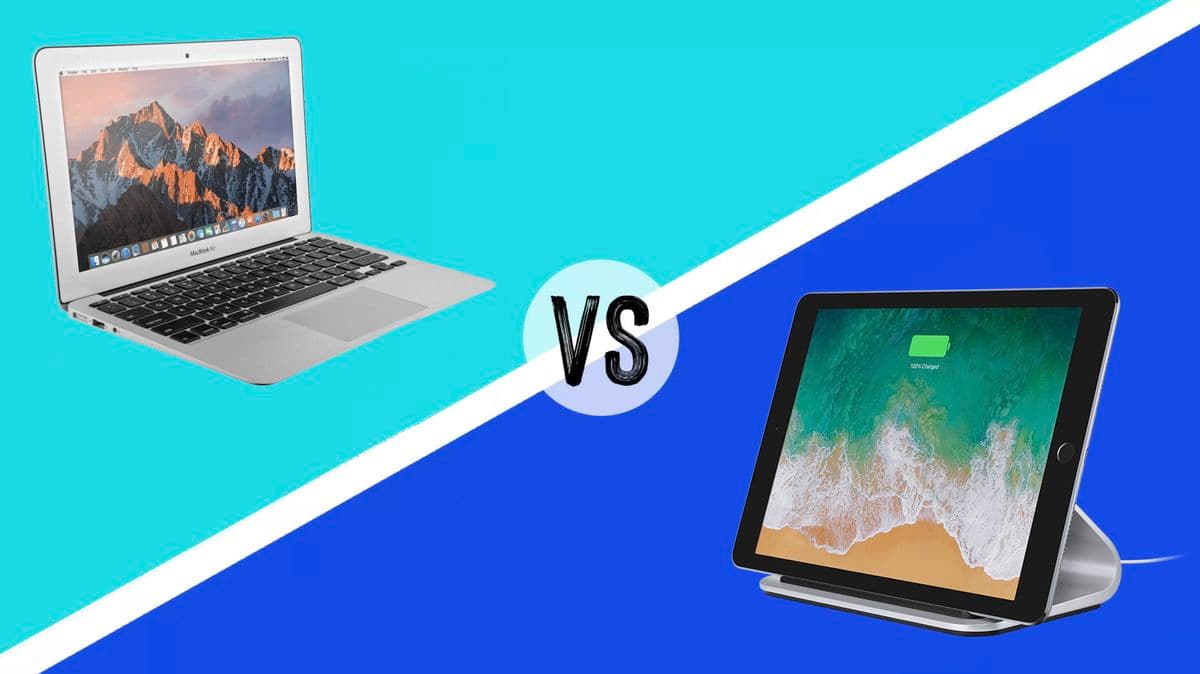
There’s an ongoing debate about which device holds the upper hand — the iPad or the laptop. It’s not an easy question to answer. This blog explores the key benefits and drawbacks of both gadgets to help you decide which one suits your needs best.
It is well known fact that the laptop was introduced long before the iPad. Even though laptops already existed, iPads were to fill a different need and experience that laptops couldn’t fully offer.
The reasons why iPads were introduced:
· Portability and Convenience: The iPad was designed to be lighter, thinner, and easier to carry than a laptop. It offered instant access just unlock and start using without waiting for boot-up time.
· Touchscreen Experience: Unlike laptops that rely on keyboards and trackpads, the iPad introduced a fully touch-based interface, making it more natural for browsing, reading, sketching, and entertainment.
· Entertainment and Creativity: Apple positioned the iPad as a media and creativity device perfect for watching videos, reading eBooks, drawing with the Apple Pencil, and using creative apps.
· Different Target Users: Laptops were often seen as work or productivity devices, while iPads aimed at casual users, students, travelers, and artists who needed something between a smartphone and a laptop.
Difference Between iPads and Laptops
· Flexibility:
iPads are more flexible compared to laptops. Their lightweight design and compact size make them easy to carry anywhere, whether you’re traveling, studying, or working remotely. With detachable keyboards and Apple Pencil support, they can switch roles — from a tablet for entertainment to a mini workstation for productivity.
· Ease of Use:
iPads are easier to use than laptops. Their touch-based interface and simple navigation make them extremely user-friendly, especially for beginners and children. Tasks such as browsing the internet, watching videos, reading eBooks, or joining online meetings can be done with just a few taps — no need for complicated software installations.
· Performance and Power:
Laptops generally offer more powerful processors and larger RAM capacities, making them better suited for heavy multitasking, programming, and gaming. iPads, on the other hand, are designed for efficiency and speed in everyday use, handling creative tasks like drawing, video editing, and note-taking with ease.
· Storage and File Management:
Laptops provide more storage capacity and easier access to file management systems. iPads have limited internal storage and rely heavily on cloud storage or external drives. However, Apple’s iCloud integration helps users keep files synced and accessible across all devices.
· Price Range:
iPads are generally more affordable than high-end laptops, though premium iPad models can be just as expensive. Laptops, however, offer a wider range of configurations depending on performance needs and budget.
· Suitability:
iPads are best suited for casual users, students, and creative professionals who value portability, touch interaction, and quick access. Laptops, in contrast, are ideal for professionals, programmers, and business users who require higher performance, multitasking capability, and compatibility with advanced software.
Both iPads and laptops have their unique strengths. If you prioritize flexibility, portability, and ease of use, an iPad might be your best companion. But if your work involves heavy multitasking or professional software, a laptop remains the more powerful and practical choice. Ultimately, the “upper hand” depends on your personal needs and how you plan to use your device.