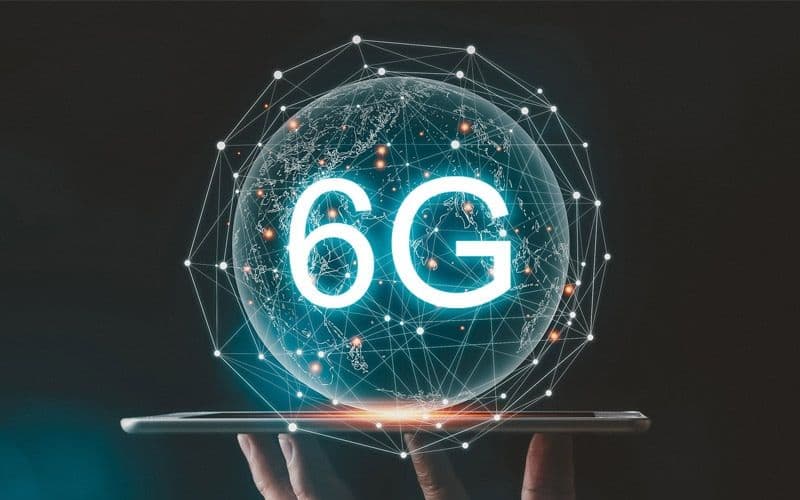
As the world becomes increasingly digital, the demand for faster and smarter connectivity continues to grow. The next generation of wireless communication, 6G, is expected to transform the way people interact with technology. While 5G significantly improved mobile internet speed and reduced latency, 6G aims to create a fully integrated and intelligent network that connects people, machines, and environments across the globe.
6G is designed to support an advanced digital ecosystem where billions of devices communicate seamlessly. By combining ultra-fast speeds, artificial intelligence, and new spectrum technologies, it will enable applications that were previously impossible with existing networks.
What Makes 6G Unique
One of the most significant improvements of 6G will be its extremely high speed and low latency. Experts predict that 6G networks could deliver speeds of up to 1 terabit per second, which is nearly 100 times faster than current 5G networks. This will make real-time communication, advanced automation, and immersive digital experiences much smoother and more reliable.
Another key innovation is the use of terahertz spectrum frequencies, which offer massive bandwidth for data-heavy applications. Unlike earlier networks that relied mainly on lower frequency bands, 6G will use advanced radio technologies capable of transmitting huge volumes of data quickly and efficiently.
Artificial intelligence will also play a major role in the functioning of 6G networks. Technologies from the field of Artificial Intelligence will be integrated directly into the network infrastructure, allowing systems to automatically optimize performance, predict network traffic, and allocate resources in real time.
Additionally, 6G will dramatically expand the capabilities of the Internet of Things ecosystem. Billions of smart devices—from home appliances and wearable gadgets to industrial machines—will be connected simultaneously. These devices will communicate across land, air, and even space, enabling a truly global network of intelligent systems.
Applications of 6G in the Future
The impact of 6G will extend across many industries and aspects of daily life. In healthcare, doctors may perform remote surgeries using advanced robotic systems supported by real-time data transmission and holographic imaging.
Smart cities will also benefit from 6G networks. Traffic systems, energy grids, and emergency services could operate with real-time data analysis, improving efficiency and safety in urban environments.
Education and workplaces may become more immersive through technologies such as Extended Reality (XR), allowing people from different parts of the world to collaborate in realistic virtual environments.
Autonomous vehicles, drones, and robotic systems will rely heavily on ultra-fast, low-latency communication provided by 6G networks. These systems will be able to share information instantly, improving safety and coordination.
Comparison: 5G vs 6G
Compared with 5G, 6G will introduce major advancements in speed, capacity, and intelligence. While 5G networks currently provide peak speeds of around 10 gigabits per second, 6G is expected to reach speeds close to 1 terabit per second. Latency could drop from approximately 10 milliseconds in 5G to about 1 millisecond in 6G, enabling near-instant communication.
The spectrum used by 5G mainly falls within the millimeter-wave range of 30–300 GHz, whereas 6G is expected to operate within the terahertz range of 0.1–10 THz. AI integration in 5G networks is still limited, but in 6G it will be deeply embedded within the network infrastructure.
Another major difference is device capacity. While 5G networks can support millions of connected devices, 6G aims to handle billions of devices simultaneously. Additionally, 5G coverage is largely terrestrial, whereas 6G will integrate terrestrial, aerial, and satellite communication systems for broader global connectivity.
Challenges for 6G Development
Despite its enormous potential, several challenges must be addressed before 6G becomes widely available. Building the infrastructure required for terahertz communication will require new hardware and significant investment. Governments and technology organizations must also work together to establish global standards and regulations for spectrum usage.
Cybersecurity will become increasingly important as billions of devices connect to the network. Protecting data and preventing cyber threats will be a major priority for developers and policymakers.
Conclusion
6G represents more than just the next step in mobile connectivity—it signals the beginning of a new era of intelligent communication networks. By integrating artificial intelligence, high-frequency spectrum technologies, and massive device connectivity, 6G has the potential to transform industries, improve global communication, and redefine the digital world.
Although the technology is still in development and expected to emerge commercially in the early 2030s, its impact could be revolutionary, enabling a future where connectivity is faster, smarter, and truly universal