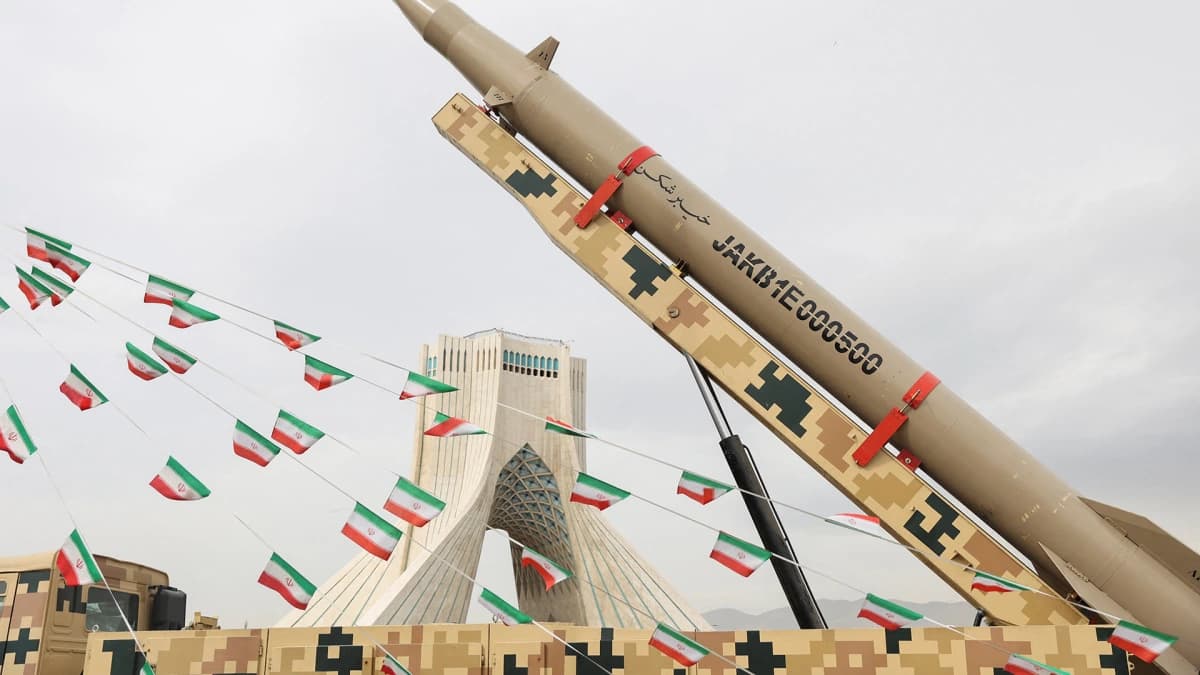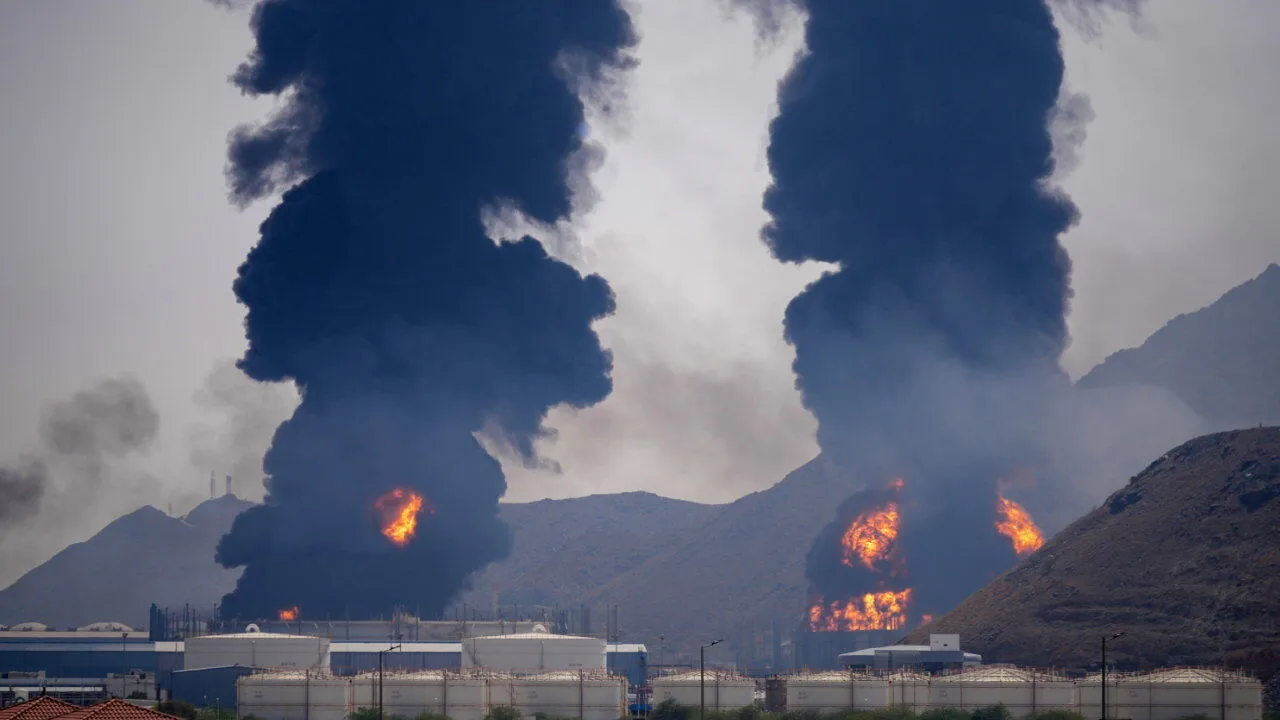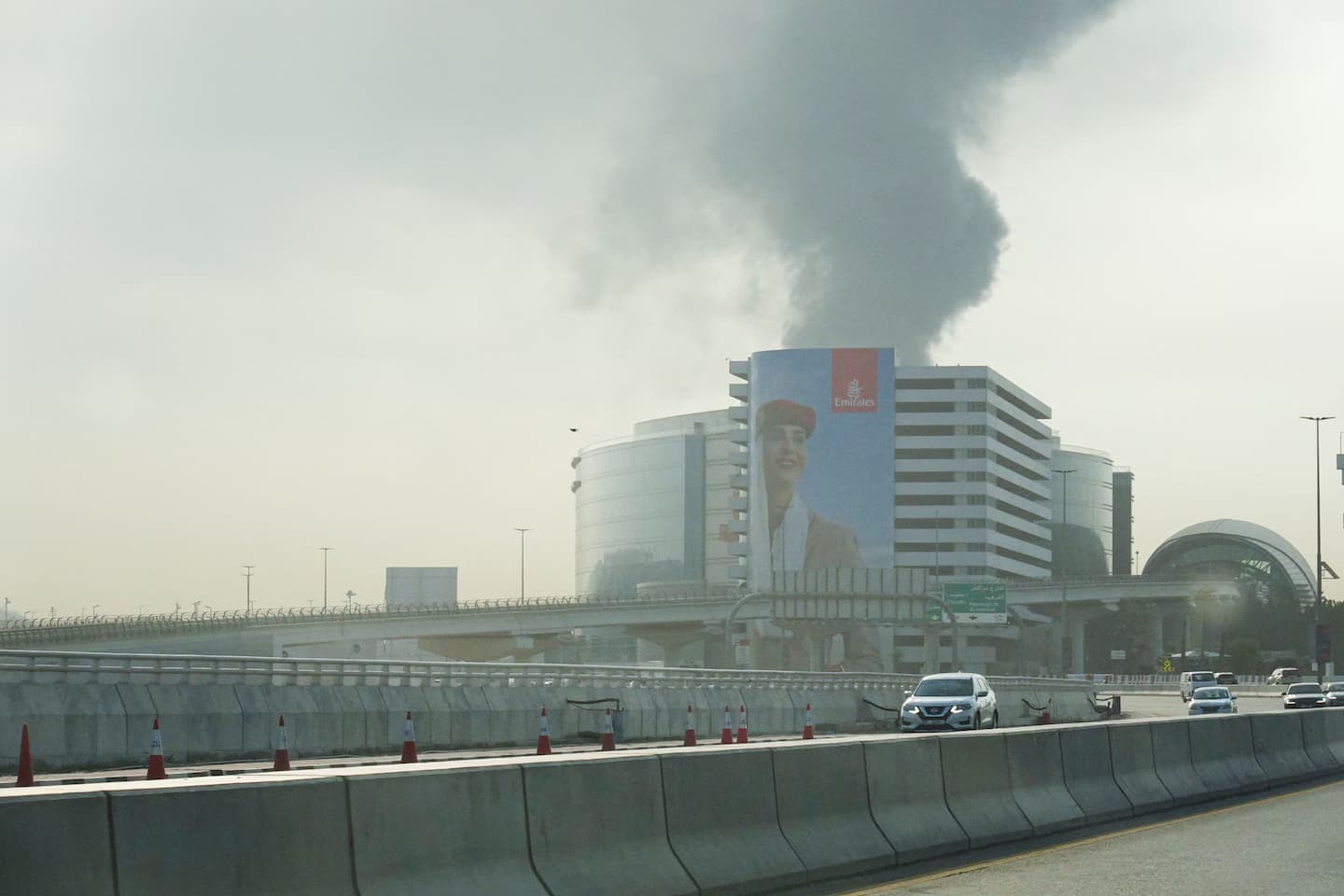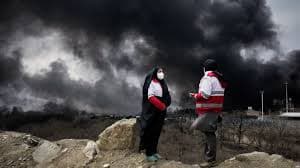
Tehran, the capital of Iran, has been engulfed in thick toxic smoke after a series of airstrikes targeted major oil depots and fuel storage facilities around the city. The attacks are part of the ongoing military conflict involving Iran, Israel, and the United States, which has intensified in recent weeks and raised serious humanitarian and environmental concerns.
According to reports, the strikes hit key fuel depots such as the Shahran and Shahr-e-Rey storage facilities near Tehran. The explosions triggered massive fires that burned for hours, sending large plumes of black smoke into the sky and covering the city with hazardous air pollution. Residents woke up to darkened skies, while some areas experienced unusual “black rain,” believed to be caused by soot and chemicals mixing with rainfall.
Health experts and environmental authorities have warned that the smoke contains dangerous pollutants including hydrocarbons, sulphur compounds, and nitrogen oxides. These chemicals can cause respiratory problems, eye irritation, and long-term health risks such as cancer if people are exposed for extended periods. The World Health Organization (WHO) also cautioned that the toxic air and contaminated rain could affect soil, water, and food supplies.